
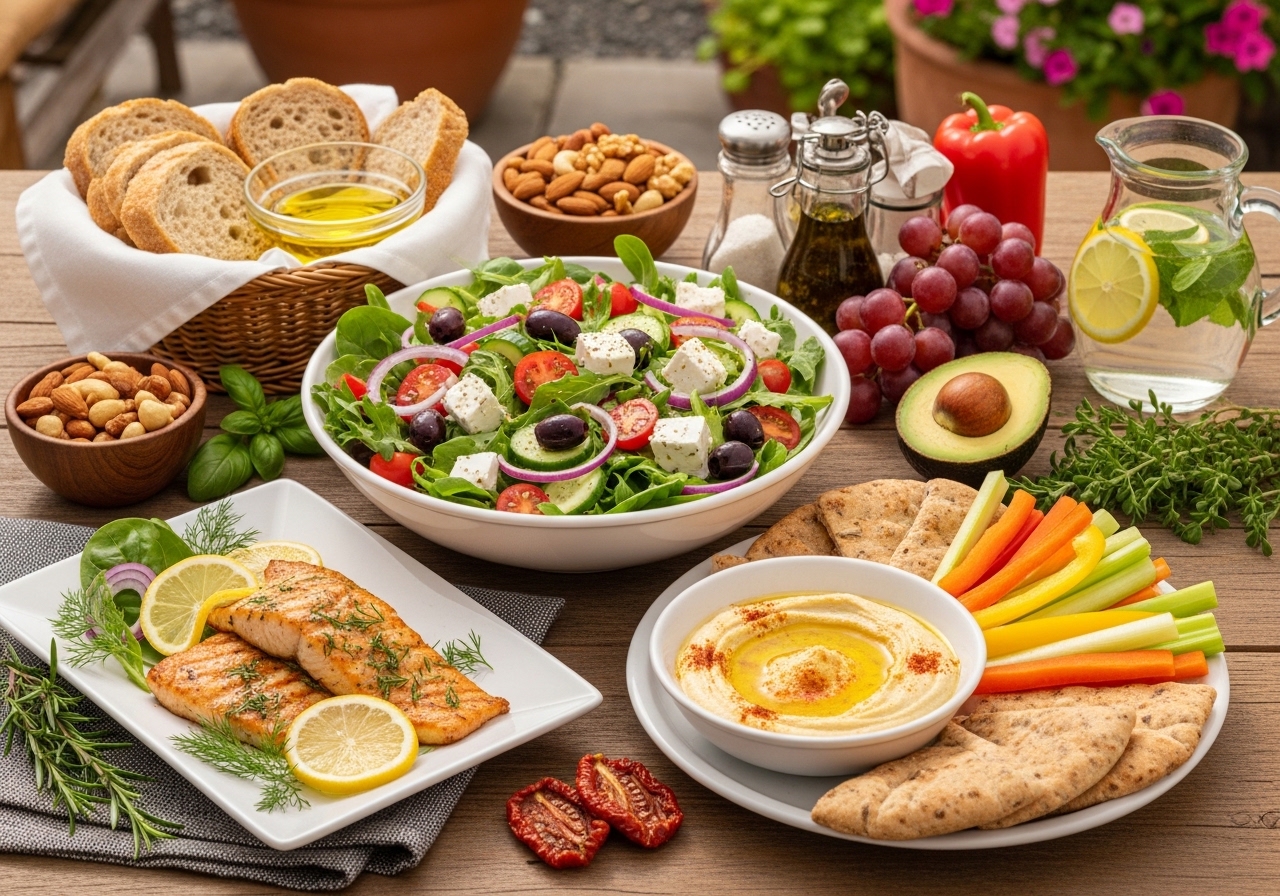
Introduction
The High Protein Mediterranean Diet is quickly becoming one of the most effective approaches for sustainable weight loss, fat reduction, and long-term metabolic health.
Unlike extreme low-carb plans or restrictive crash diets, this method combines:
- Lean protein
- Healthy fats
- Fiber-rich vegetables
- Smart carbohydrates
- Balanced portions
It’s not about eliminating food groups.
It’s about optimizing them.
In this complete guide, you’ll learn:
- What the high protein Mediterranean diet really is
- How much protein you actually need
- The best protein sources
- A full sample day of eating
- Mistakes to avoid
- How to structure your weekly meals
What Is the High Protein Mediterranean Diet?
The traditional Mediterranean diet emphasizes:
- Olive oil
- Vegetables
- Fish
- Whole grains
- Legumes
The high-protein version adjusts the macronutrient balance by:
- Increasing lean protein intake
- Moderating refined carbs
- Prioritizing muscle-supportive meals
It keeps the heart-healthy foundation while improving satiety and fat-loss efficiency.
Why Increasing Protein Improves Fat Loss
Protein plays several critical roles:
- Increases satiety hormones
- Preserves lean muscle mass
- Boosts thermic effect of food
- Reduces late-night cravings
Many people fail with traditional Mediterranean plans because protein intake is too low.
When optimized properly, fat loss becomes smoother and more sustainable.
How Much Protein Do You Actually Need?
General recommendation for fat loss:
- 1.6 to 2.2 grams of protein per kilogram of body weight
Example:
- 70 kg person → 110–150g protein daily
Spread across:
- 3 main meals
- Optional high-protein snack
Best High Protein Mediterranean Foods
🐟 Seafood
- Salmon
- Cod
- Shrimp
- Sardines
- Tuna
For example, our Mediterranean Garlic Shrimp with Zucchini is an excellent low-carb dinner option rich in lean protein.
🍗 Poultry
- Chicken breast
- Turkey breast
- Ground turkey
Our Garlic Butter Steak Bites with Roasted Vegetables gives a higher iron alternative if you include red meat occasionally.
🥚 Eggs
Affordable, versatile, and highly bioavailable protein source.
🧀 Greek Yogurt
High in protein and probiotics.
Example: High Protein Greek Yogurt Chicken Salad.
🥬 Legumes
- Lentils
- Chickpeas
- White beans
Combine with seafood or poultry for balanced meals.
Sample High Protein Mediterranean Day
Breakfast
Savory egg-based meal with vegetables
Lunch
Chicken & quinoa bowl with olive oil dressing
(Like a Mediterranean Quinoa Bowl)
Snack
Greek yogurt with seeds
Dinner
Seafood skillet with zucchini
(Example: Mediterranean Garlic Shrimp)
This structure ensures:
✔ Protein distribution
✔ Fiber intake
✔ Stable energy
Weekly Structure Strategy
To avoid plateaus, rotate proteins:
- 2x Chicken
- 1x Turkey
- 2x Seafood
- 1x Red meat
- 1x Vegetarian
Balance low-carb and moderate-carb days.
Low Carb vs Balanced Mediterranean
Low Carb Version:
- Remove grains
- Increase vegetables
- Focus on seafood & poultry
Balanced Version:
- Include quinoa
- Include legumes
- Moderate whole grains
Choose based on activity level.
Common Mistakes to Avoid
❌ Too much olive oil
❌ Not tracking protein
❌ Overeating nuts
❌ Ignoring portion control
❌ Turning it into a high-carb pasta diet
Mediterranean does not mean unlimited bread.
Is It Sustainable Long Term?
Yes — if:
- Protein is prioritized
- Meals are structured
- Processed foods are minimized
- Portions are controlled
Unlike keto, this plan allows flexibility and cultural food inclusion.
Who Should Follow It?
✔ People aiming for fat loss
✔ Those who want muscle preservation
✔ Busy professionals
✔ Athletes
✔ Anyone tired of restrictive dieting
Final Thoughts
The High Protein Mediterranean Diet is not a trend.
It is:
- Scientifically supported
- Flexible
- Sustainable
- Delicious
- Effective for weight loss
When combined with structured meals like:
- Mediterranean Garlic Shrimp
- Garlic Butter Steak Bites
- Baked Lemon Herb Cod
- High Protein Chicken Bowls
It becomes a powerful long-term system.
This is how you build a healthy lifestyle — not just lose weight temporarily.
